Working notes from inside scaled Agile programmes in safety-critical engineering. Each piece sits at the intersection of technical depth and organisational leadership, drawn from current practice rather than framework theory. Several are chapters or precursors to the book Leading Agile When No One Agrees.
Essays
In chronological order, newest first
The full set of long-form pieces hosted here. Each is mirrored to Medium and Substack for readers who prefer those platforms; the canonical version lives on this site.
/
No matches
Nothing in the essays matches that. Try a different term, or browse the full list.
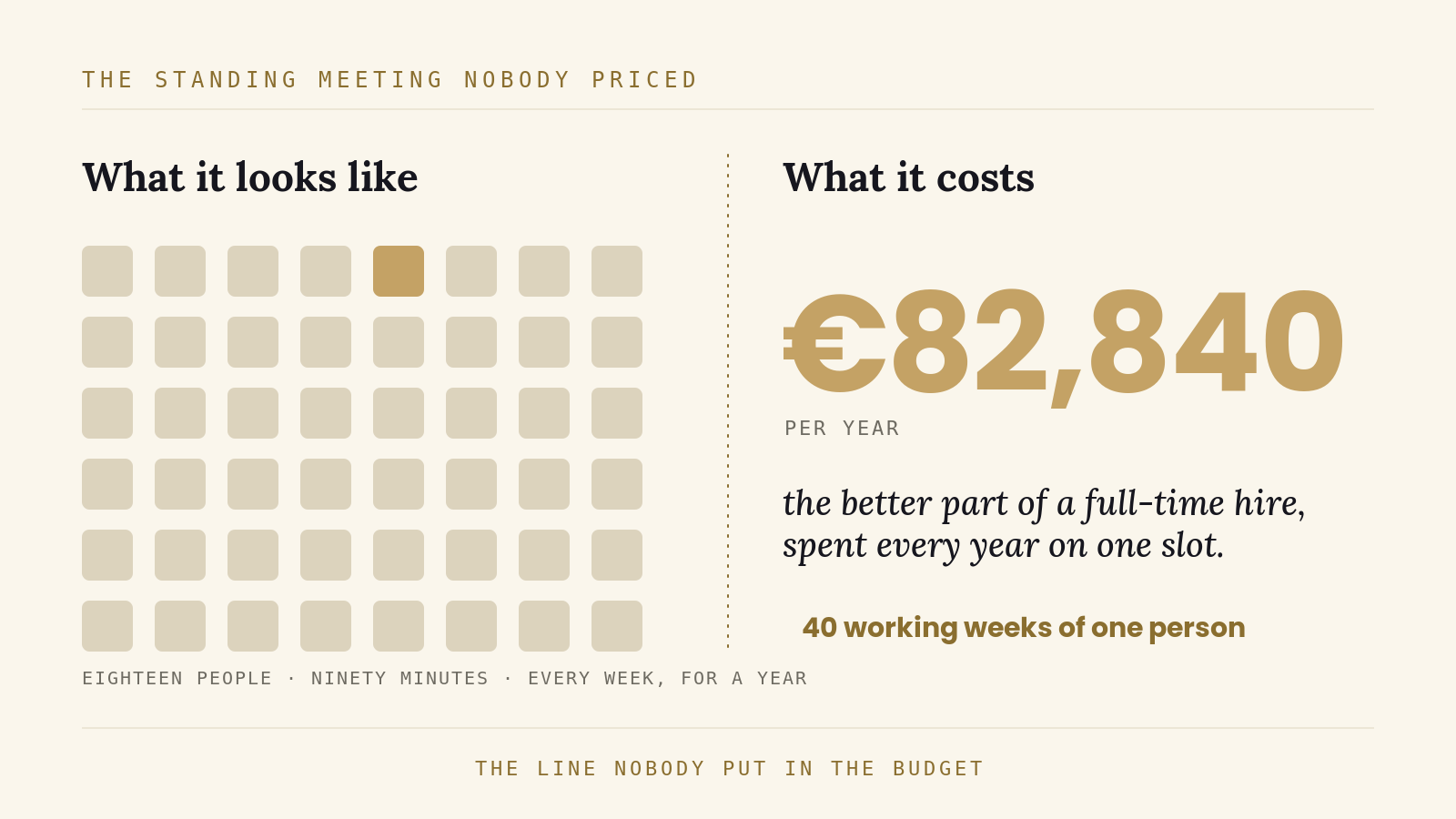
A recurring meeting is one of the bigger purchases a team makes, and it never shows up on a budget. What a standing meeting really costs over a year, how that cost hides as coordination debt in the Drift, and a calculator that prices any meeting so you can decide whether it still earns its slot.
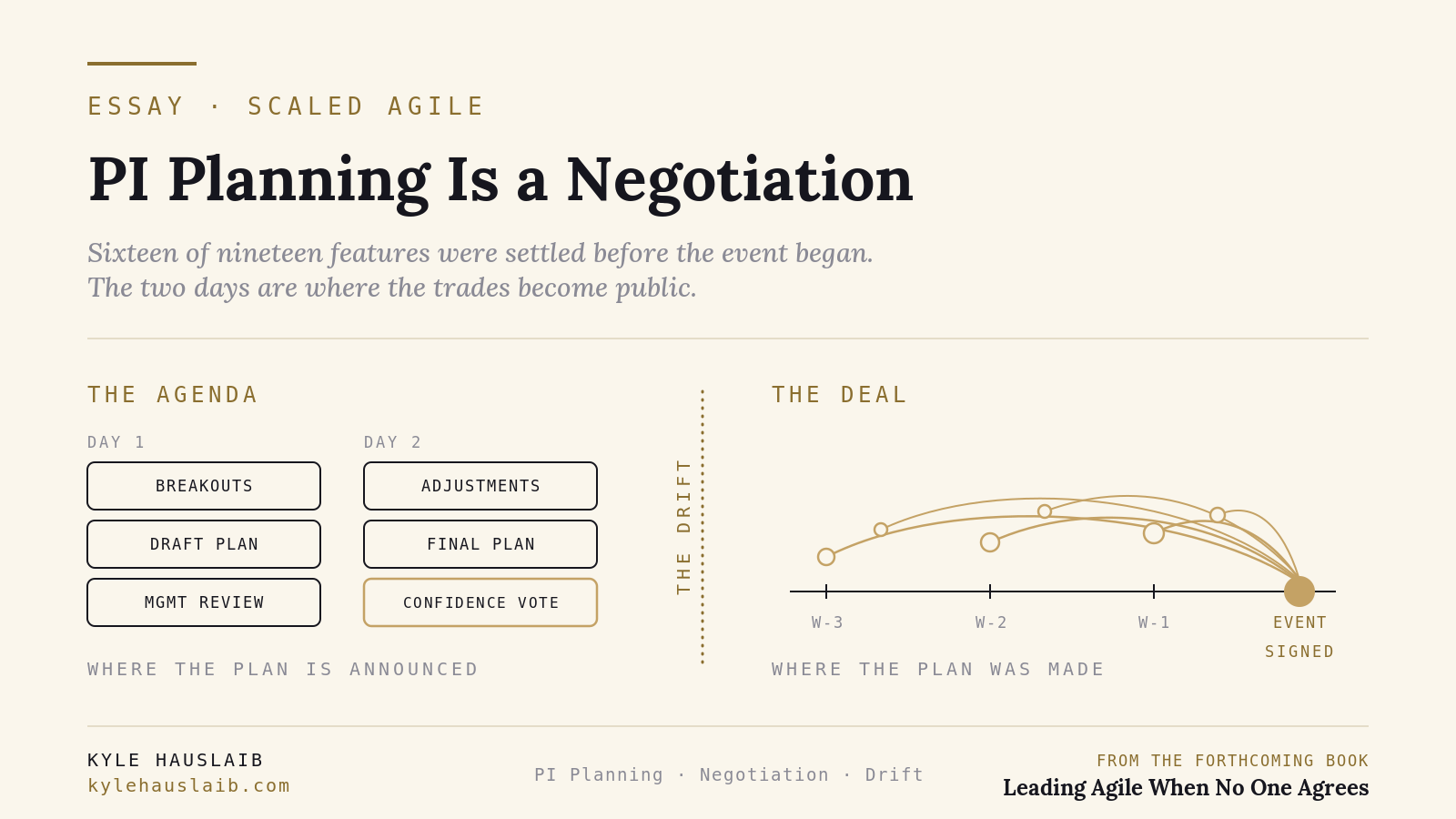
Sixteen of nineteen committed features were settled before the event began. Why the two days work like a summit, turning private trades into public commitments, what the confidence vote measures as a negotiation audit, and the small administrative habits that move the trading into daylight.
Leading the people who don’t report to you, the one lever left when authority runs out, and why the structures we build to coordinate teams can quietly drain the very motivation we keep asking them for. The room of eleven who answered to other managers, intrinsic motivation and lateral leadership as one lever seen from two ends, and the diagnostic that shows where your influence is imaginary.
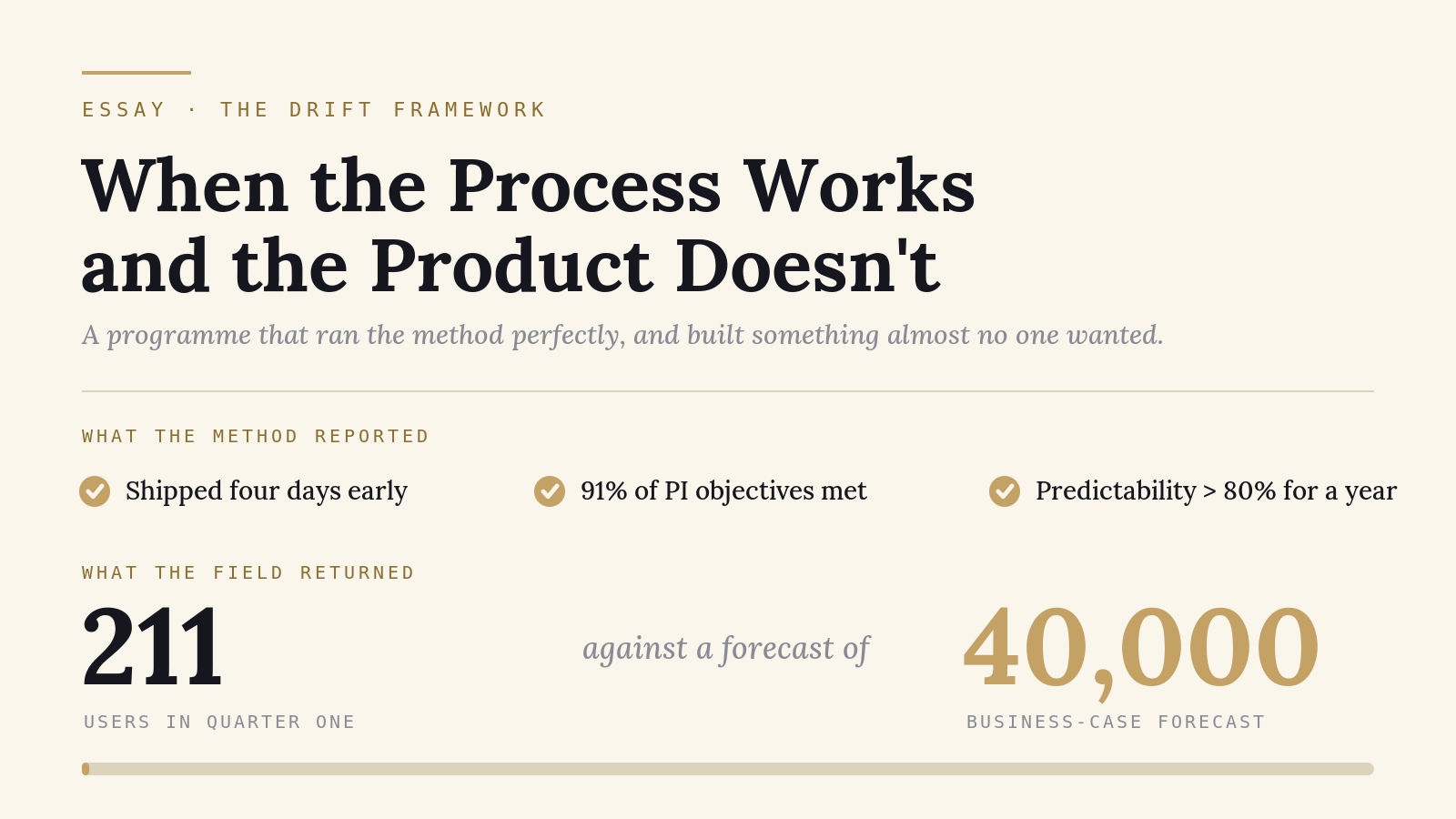
A release that shipped four days early and met ninety-one percent of its committed objectives, a feature two hundred and eleven people used against a forecast of forty thousand, and why a process that runs perfectly can carry you with great confidence in the wrong direction. The two greens a board cannot tell apart, the question no role on the train owned, and the count that exposes a dead feedback loop.
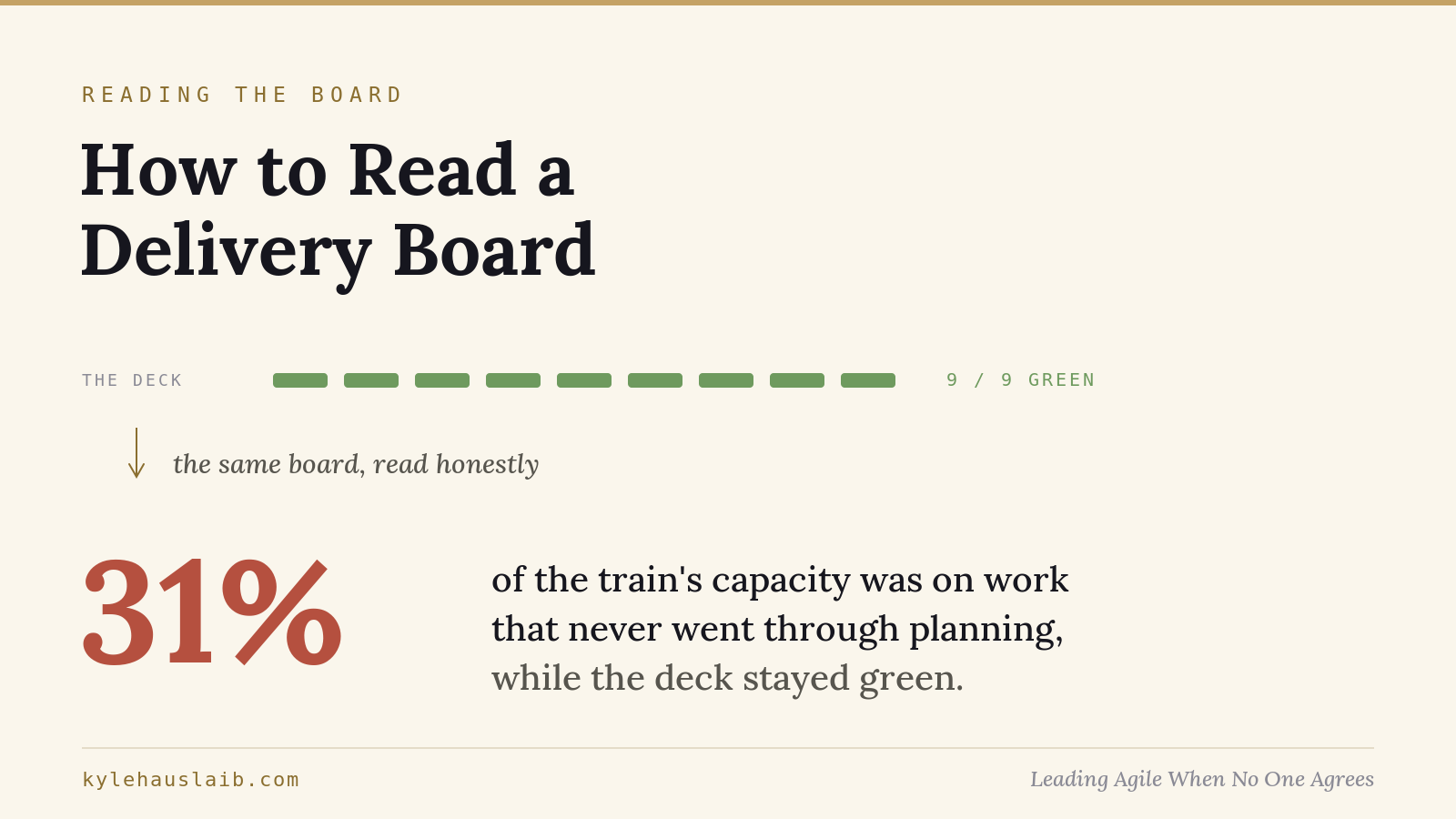
A steering deck that showed nine of nine features green, a programme everyone could feel was sliding, and the four readings of the same board that showed where the work had actually gone: side-door intake, cross-team interface gaps, the drift between committed and active work, and where the people actually are. With a live, interactive board to read along.
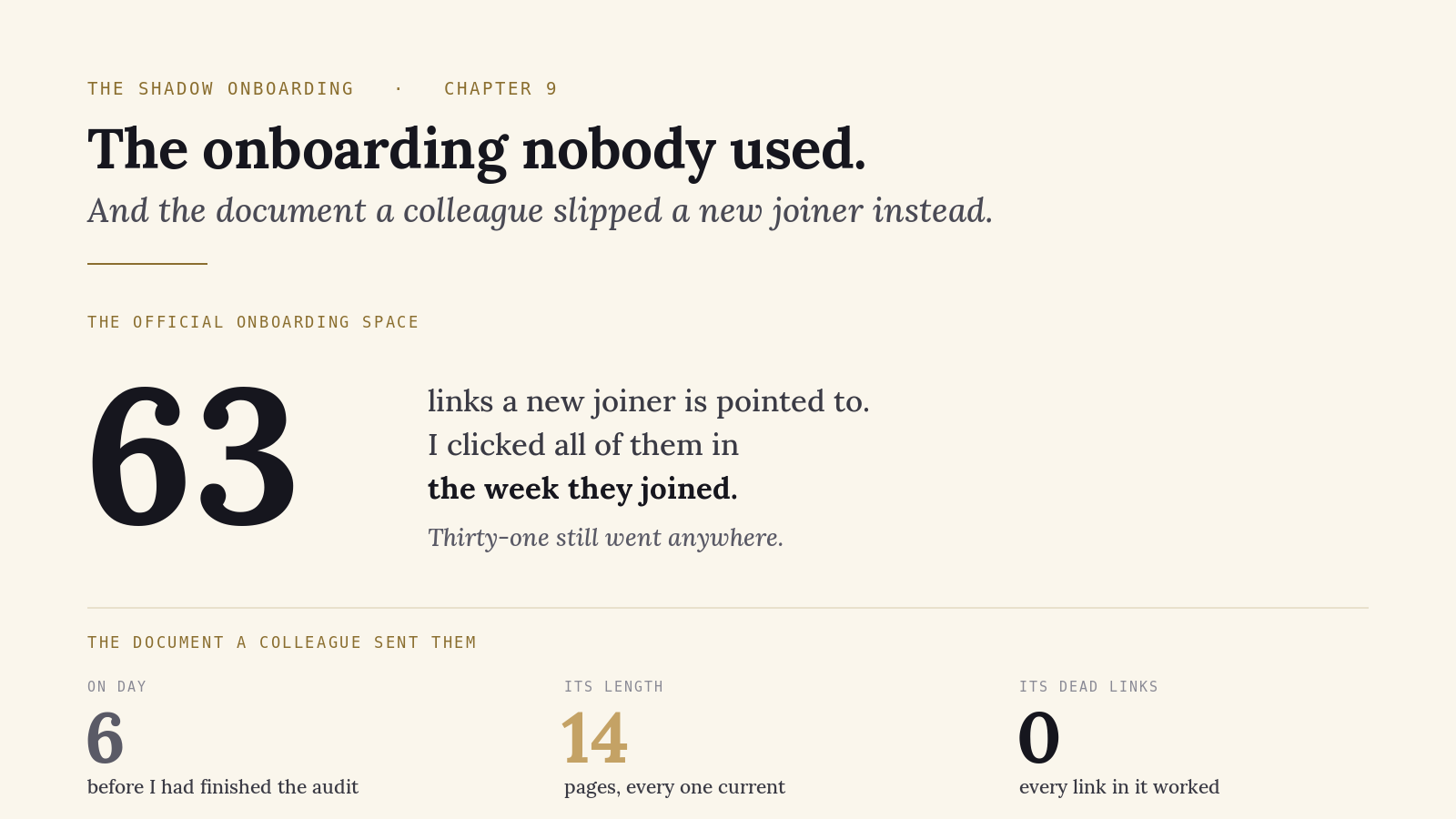
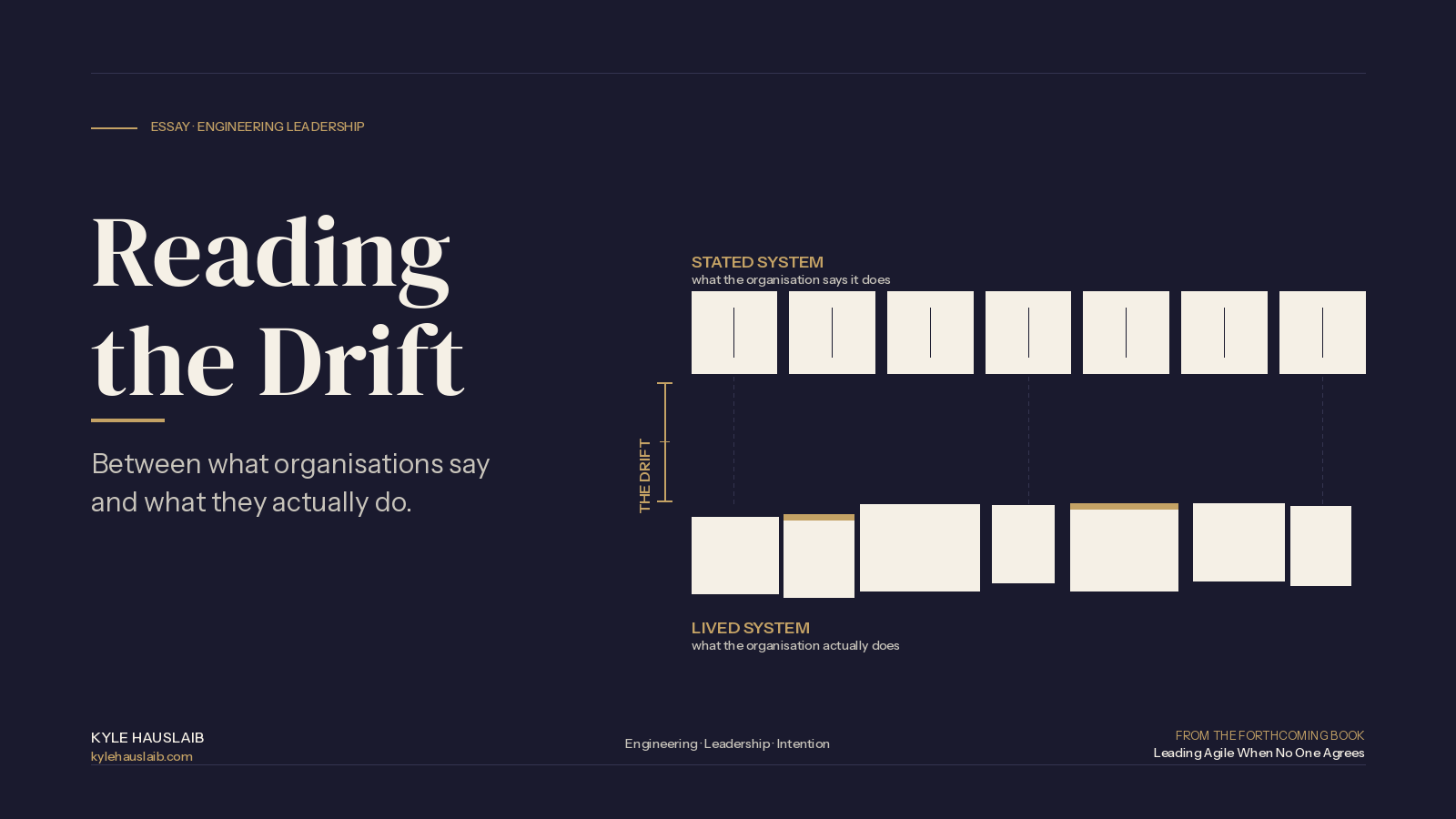
An onboarding nobody used, a document a colleague sent a new joiner in private, and the most honest map of a place I had worked in that I have ever read. Why every organisation grows a shadow onboarding, why making it official starts its decay, and the diagnostic that measures the gap between the Stated System and the Lived System.
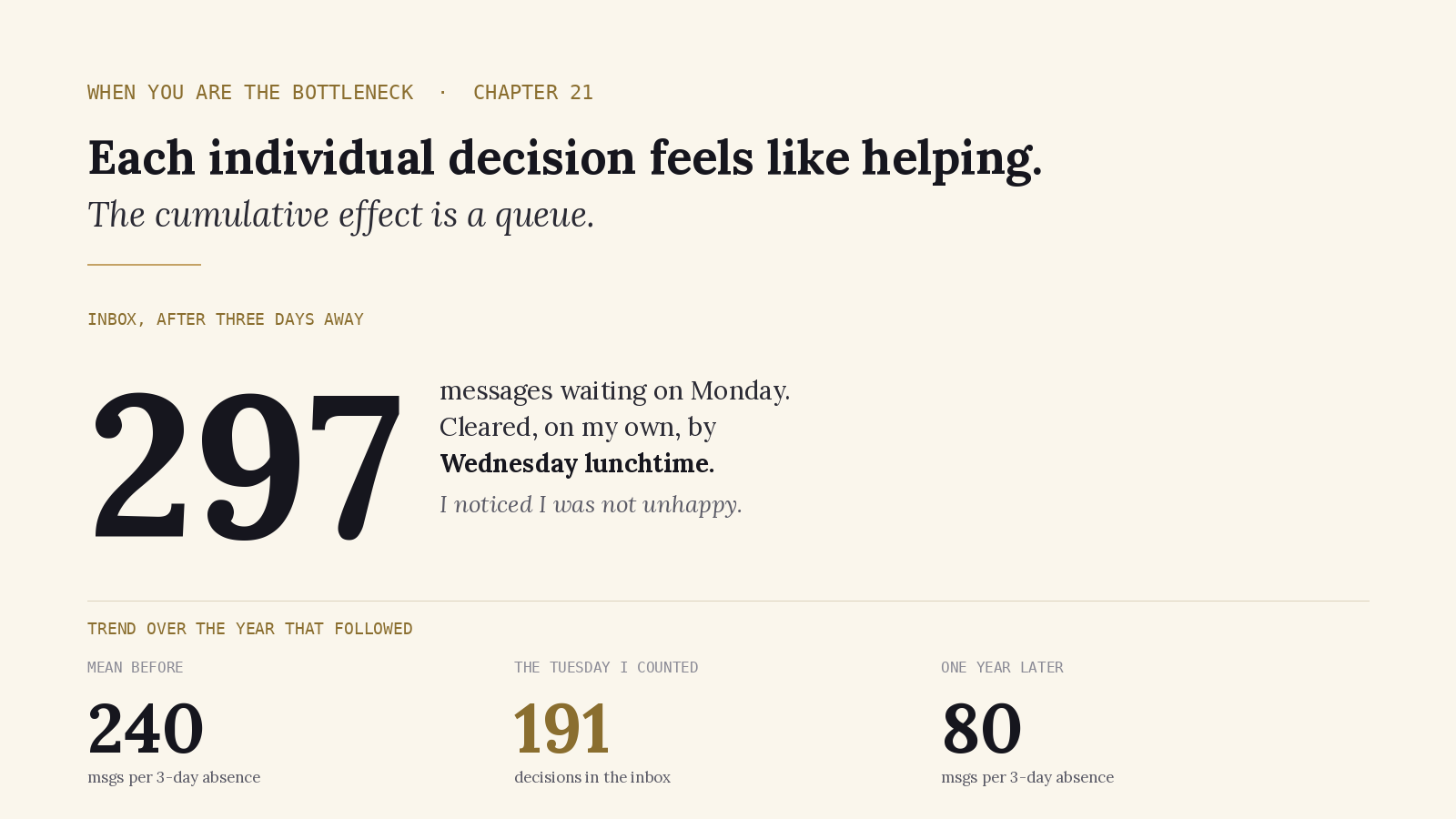
Two hundred and ninety-seven messages, a delegation framework that gave itself away, and a year of small refusals. An honest account of becoming the bottleneck in scaled engineering leadership, why the standard fix makes it slightly worse before it makes it better, and the diagnostic question that finally got me to look at it.
The framework at the spine of the book Leading Agile When No One Agrees. Every organisation runs two systems at the same time, the Stated and the Lived, and the distance between them is what leadership has to read rather than try to close. A leadership framework for the gap between what organisations say they do and what they actually do, drawn from fifteen years inside agile transformations.
A reckoning with the question ‘how can I help?’ Why it shifts diagnosis onto the team without naming the move, and what to ask yourself instead before walking into the next cadence event. The harder question I now ask myself before any standup, retro, or PI sync.
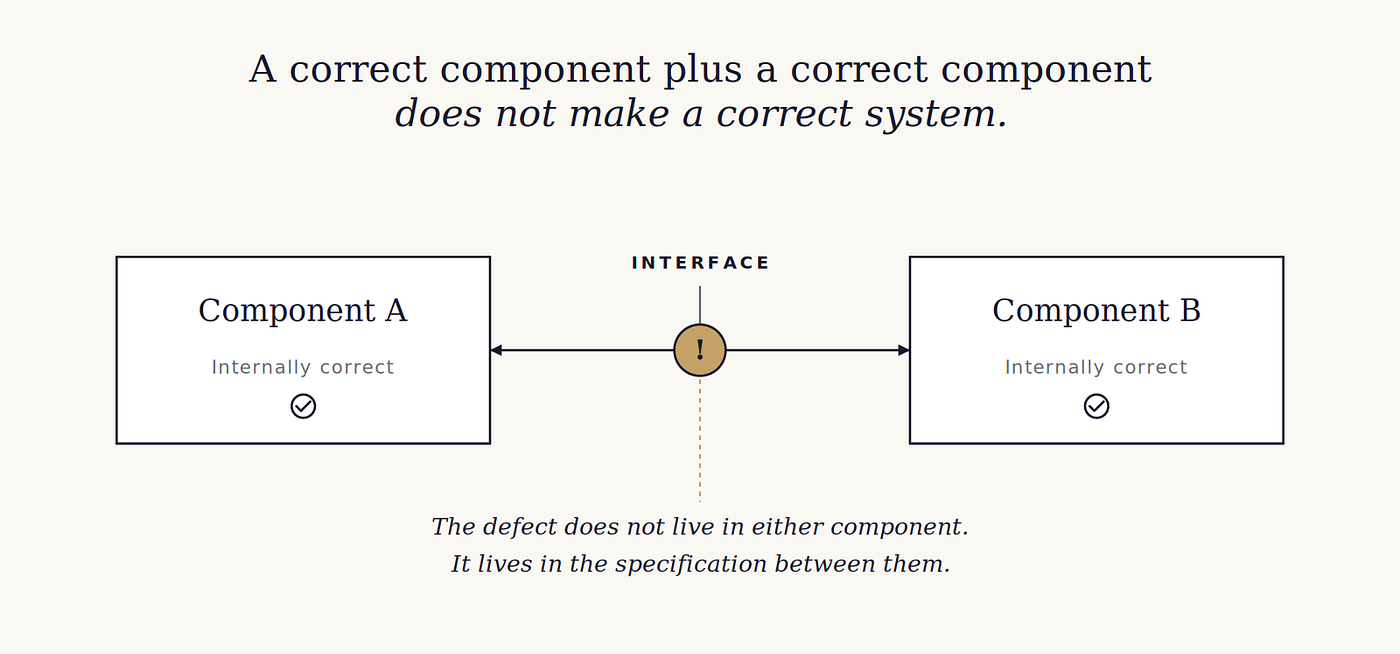
Why backlog management in scaled Agile is largely an interface problem disguised as a coordination problem, and that the discipline AUTOSAR enforces in safety-critical software is exactly what most Agile setups are missing at the boundaries between teams. What an interface contract actually looks like at the team level, and what changes when teams treat their slice of the backlog as an exported API.
New essays land roughly every two to three weeks during the run-up to the book launch. Most appear here first and then mirror to Medium and Substack a few days later. The fastest way to follow along is the Substack or Medium feed; the most direct way to discuss any of the pieces is email.
The book Leading Agile When No One Agrees expands several of the threads above into book-length form. It is out now in paperback.
An occasional email when a new essay goes up: on the Drift, leadership in scaled agile, and the gap between what organisations say and what they do. A couple a month at most. Double opt-in, unsubscribe anytime, and nothing is stored on your device.
 View on Medium ↗
 View on Substack ↗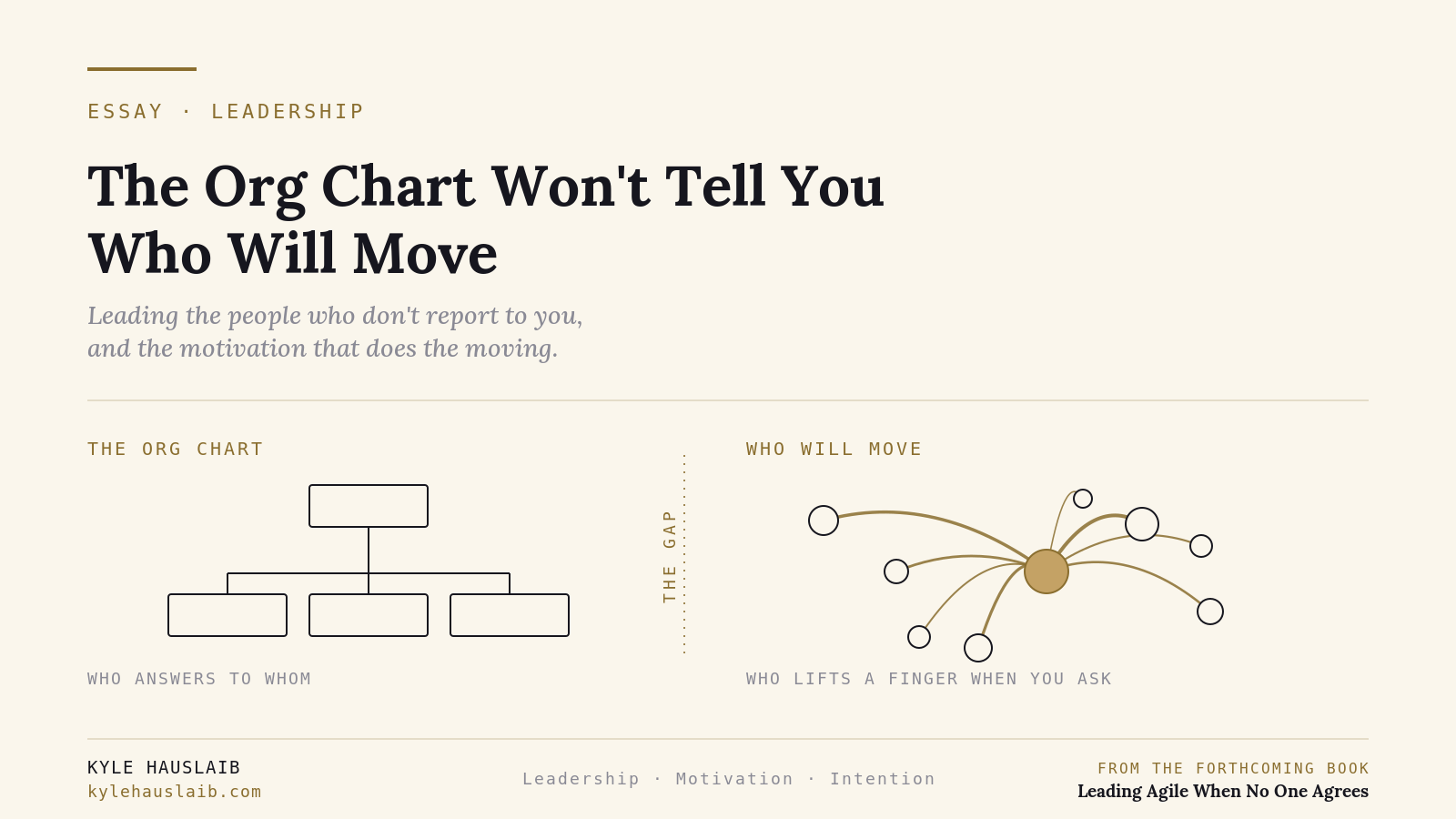
 View on LinkedIn ↗